
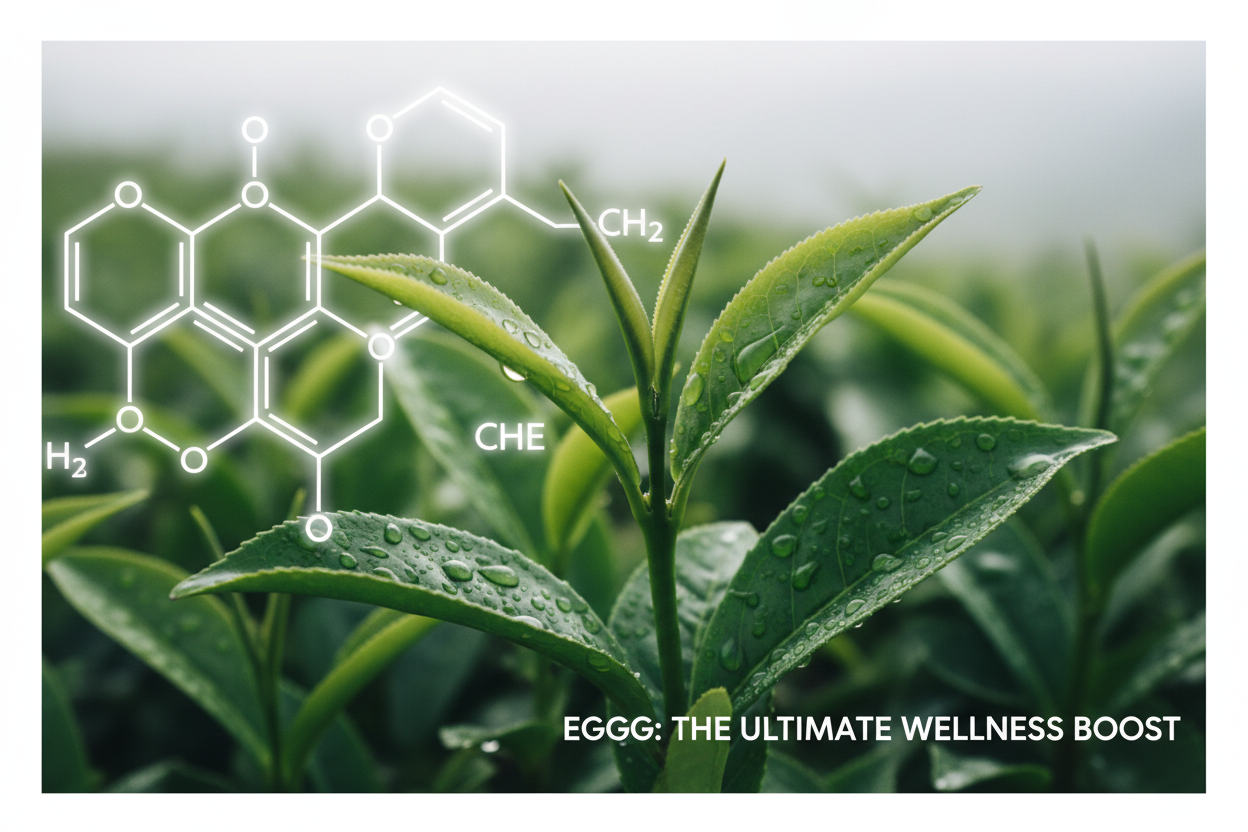
There are manufacturers who offer ten different active ingredients in ten different products, depending on what's currently trending. At tigogreen, we deliberately don't do that. Since our founding, almost everything we do revolves around a single plant compound: EGCG from green tea. No jack-of-all-trades approach, but specialization – and there's a reason for that, one that goes deeper than pure marketing.
Why EGCG in particular
EGCG (epigallocatechin gallate) is the most well-researched catechin from green tea and also one of the most frequently cited plant compounds in nutritional research. This very depth of research was our reason for specializing instead of spreading ourselves too thin: By focusing on one compound, you can truly penetrate quality, origin, and dosage down to the smallest detail – instead of only having superficial knowledge of ten raw materials.
The story that made EGCG research famous
A chapter that many don't know, but which significantly shaped EGCG research: In 2004, Heidelberg hematologist Prof. Werner Hunstein was diagnosed with systemic light chain amyloidosis – a rare heart condition that was considered incurable at the time. Based on laboratory research by Prof. Erich Wanker (Max Delbrück Center Berlin), who had shown that EGCG could reduce amyloid deposits in the lab, Hunstein began a self-experiment: two liters of green tea daily. He observed an improvement in his heart values and published his case in 2007 in the renowned journal Blood – a case report that attracted international attention and significantly advanced EGCG research on amyloidosis.
What science has honestly said about it since then
And here comes the part we don't want to omit, even if it doesn't entirely support our own enthusiasm for EGCG: The subsequent placebo-controlled, randomized study at Heidelberg University Hospital with 38 amyloidosis patients found no statistically significant difference between the EGCG and placebo groups after one year. A single, well-documented self-experiment is different from a controlled clinical study – and precisely this difference is one of the reasons why we at tigogreen are so cautious with claims of efficacy. A later observational study on EGCG green tea capsules in women with uterine fibroids (Freie Universität Berlin, 30 participants) also showed a slight improvement in subjective well-being, but explicitly no correlation between capsule intake and fibroid size or laboratory values. The researchers themselves recommend larger, controlled follow-up studies before one can speak of a confirmed benefit.
Why we still tell this story
Because science isn't just about confirmed success stories, but also about results that don't directly confirm one's own hopes. Precisely this honest handling of open questions is, for us, part of what specialization means: not just selling a product, but truly understanding the substance behind it – including its limitations. That's why we are also involved in research ourselves: We are currently collaborating with a Viennese university hospital on an ongoing, yet-to-be-published double-blind study. As soon as results are available, we will report on them – just as we have done with the less conclusive studies here.
Dosage and safety in detail
How much EGCG is in a cup of tea, where the EFSA limit lies above which initial liver value changes were observed in studies, and what you should pay attention to with capsules, we have summarized in detail in our article Green Tea Extract – Liver Risk or Underestimated Potential.
Conclusion
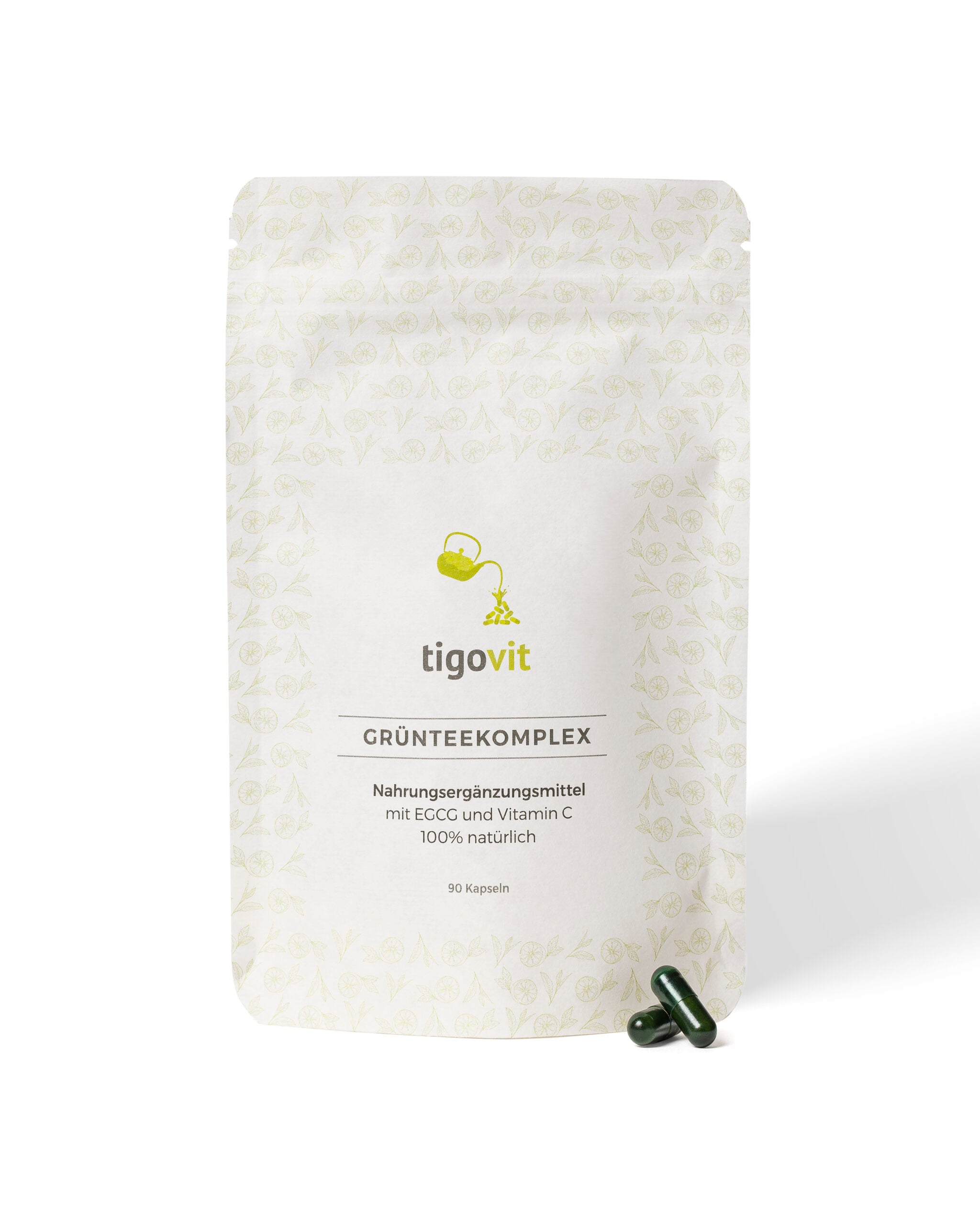
We didn't specialize because EGCG is a miracle cure – but because a single, well-researched substance allows us to really go in-depth: with quality, with origin, and also with an honest classification of what science currently shows and what is still open. If you are curious about the result of this specialization, you will find it in our tigovit Green Tea Extract.




Share:
Die Geschichte hinter tigovit: Selbst gegründet, ohne Investoren, mit Herzblut